A newly-released U.S. Navy investigation reveals a cascade of failures—faulty systems, poor training, and critical human error—that led the guided-missile cruiser USS Gettysburg to shoot down a friendly F/A-18F Super Hornet and nearly hit a second over the Red Sea last December. The report places ultimate responsibility on the ship’s commanding officer for the “neither responsible nor prudent” decision.
In the early hours of December 22, 2024, two U.S. Navy aircrew were preparing to land on the aircraft carrier USS Harry S. Truman when their world turned inside out. “Are you seeing this?” the pilot of an F/A-18F Super Hornet tanker asked his Weapon Systems Officer, spotting a Standard Missile-2 (SM-2) rocketing toward them.
They had just refueled a fellow fighter and were minutes from landing. “Yeah, I’m watching it,” the WSO replied before both ejected moments before the missile struck, destroying their jet. A second Super Hornet, approaching a minute later, saw the explosion and then another SM-2 launch, which narrowly missed its tail by “one to two plane lengths” before crashing into the sea.
The Navy investigation released Thursday paints a troubled picture of the USS Gettysburg in the hours and weeks leading up to the friendly fire incident. According to a senior Navy officer (SNO) who briefed reporters, a primary factor was “a lack of re-integrated training.”
READ ALSO: https://www.modernmechanics24.com/post/umaine-kairos-nuclear-infrastructure-innovation
The Gettysburg had only operated with the Truman Carrier Strike Group for 7 of the 45 days prior to the shootdown, rejoining the formation just three days before the incident after being detached for other duties. This lack of cohesion, the SNO stated, “contributed to the misidentification.”
The technical failures aboard the Ticonderoga-class cruiser were severe and numerous. The investigation found that in the weeks and hours before the engagement, the ship’s Link 16 tactical datalink was “noticeably degraded,” suffering frequent dropouts.
More critically, the Identification Friend or Foe (IFF) system, designed to prevent exactly this scenario, was completely unreliable. Watchstanders reported “frequent IFF problems,” including system failures that meant the two Super Hornets were not properly tagged as friendly on the ship’s displays. Alarmingly, the crew in the Combat Information Center (CIC) at the time did not know the IFF was broken.
WATCH ALSO: https://www.modernmechanics24.com/post/china-humanoid-robot-combat-moves
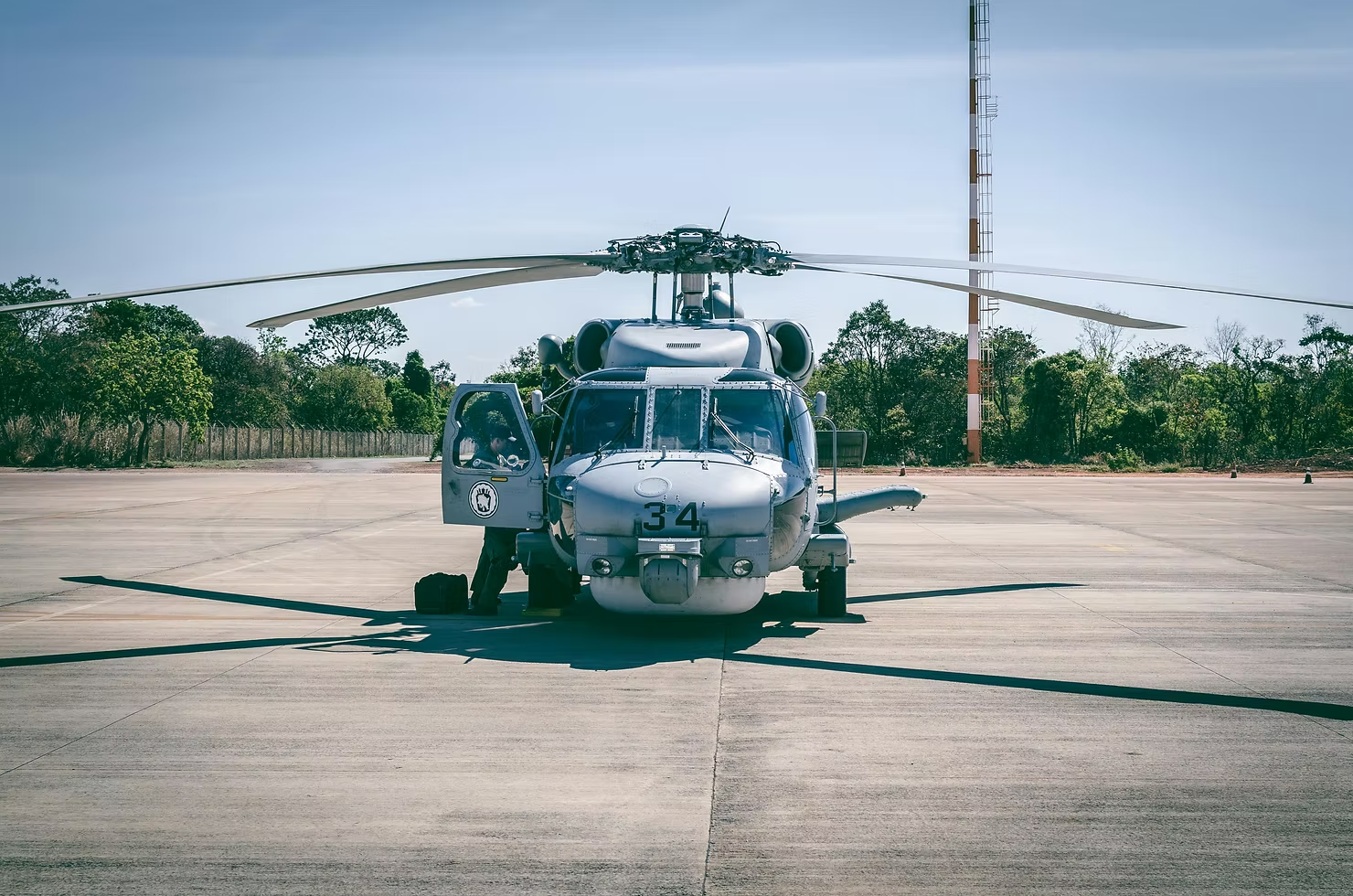
Compounding the chaos, the ship’s SPY-1 radar coverage was reduced as its MH-60R Seahawk helicopter was landing, and an overhead E-2D Hawkeye early warning aircraft was experiencing its own radar problems. Amid this “perfect storm,” the Gettysburg’s crew misidentified the tankers as a Houthi anti-ship cruise missile threat. Calls to ceasefire were ignored or unheard, and the ship’s commanding officer, operating with “low situational awareness,” authorized the launch.
The report is unequivocal in its judgment: “The decision to shoot was wrong when measured against the totality of information available.” It concluded the commanding officer’s actions “could have been prevented by action at multiple levels.” A little over a month after the incident, the USS Gettysburg’s commanding officer, Captain Justin Hodges, was relieved of duty, though his name is redacted in the public report.
In response, the Navy has initiated a $55 million effort to correct widespread Aegis Weapon System software deficienies identified across the fleet. “We’ve invested over $55 million since this incident to correct those Aegis Weapon System deficiencies,” the SNO stated.
READ ALSO: https://www.modernmechanics24.com/post/china-zhuque3-reusable-rocket-debut
Additionally, the service has implemented 15 new training initiatives to rebuild proficiency and coordination within carrier strike groups. The tragedy serves as a stark, costly lesson in the perils of high-tempo combat, where system failures and human error can intersect with deadly consequences.