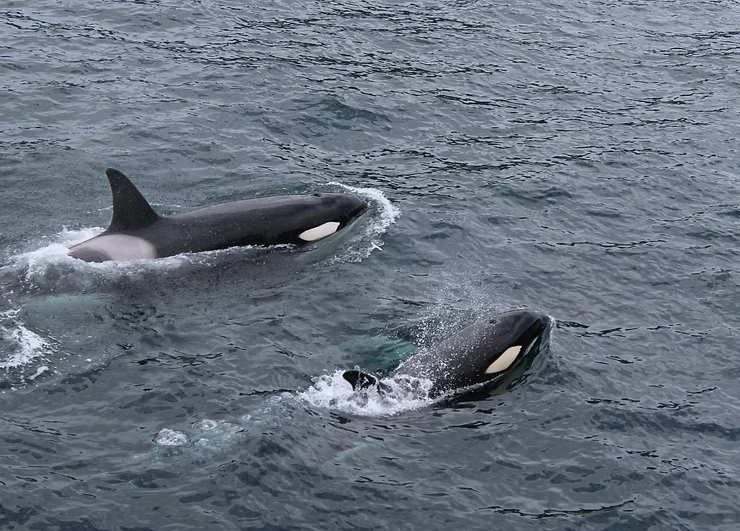
A new international study has taken a closer look at the playful — and sometimes puzzling — interactions between whales and dolphins. The question at the heart of the research: when these two marine giants meet, are they really playing together, or is it just one-sided fun?
The project, led by Dr. Olaf Meynecke from Griffith University’s Whales & Climate Program, analysed 199 separate encounters between baleen whales and dolphins. The team reviewed hundreds of photos and videos captured by the public, tour operators, and scientists across 17 locations worldwide, covering 19 different species.
The findings, published in Discover Animals, reveal that about 25% of these encounters could be classed as mutual play. For humpback whales in particular, one in three interactions showed signs of positive engagement — behaviours like rolling from side to side, presenting their bellies, and moving slowly toward the dolphins. “The vast majority of these interactions didn’t involve avoidance,” Dr. Meynecke noted. “This is interesting because dolphins are often thought to harass whales.”
Co-author and Masters graduate Olivia Crawley said watching these moments firsthand never gets old. “When you’re on the water, you often see whales and dolphins together, and you can’t help but wonder why,” she said. “Documenting things like bow riding and close touches was fascinating. Hopefully, this study will lay the groundwork for future research.”
The most common interaction saw dolphins swimming near the whale’s rostrum — similar to bow riding — a behaviour that could save dolphins energy and might represent playful behaviour from their side only.
READ ALSO: Ulefone Set to Debut Next-Generation AI-Enhanced Rugged Smartphones at MWC 2025
READ ALSO: ANYbotics Unveils Advanced Gas Leak and Presence Detection Feature for ANYmal Inspection Robot
In total, the team recorded 425 baleen whales from six species, led by humpbacks (68%), grey whales (16%), and fin whales (7%). Around 1,570 dolphins took part, with bottlenose dolphins making up more than half of sightings, followed by common and Pacific white-sided dolphins. Calves were often involved, with whale calves seen in 44 encounters, dolphin calves in 53, and both together in 21 cases.
Different whale species responded in unique ways:
- Humpbacks often moved their pectoral fins toward dolphins (172 times)
- Grey whales tended to roll (56 times)
- Southern right whales sometimes performed pectoral slaps
Signs of aggression, such as tail slaps or head slaps, were rare.
Underwater footage from suction camera tags on humpbacks even revealed dolphins following the whales down to the seafloor, maintaining close contact and possibly engaging in social play.
READ ALSO: US’ largest shipbuilder sells over 700 uncrewed underwater vehicles
Dr. Meynecke explained that while some interactions appear to be genuine play, others are more one-sided — with dolphins teasing whales, sometimes during feeding. “Studies like this help us understand the complex social lives of marine mammals,” he said. “They’re also important for understanding how different species share and interact in our oceans.”