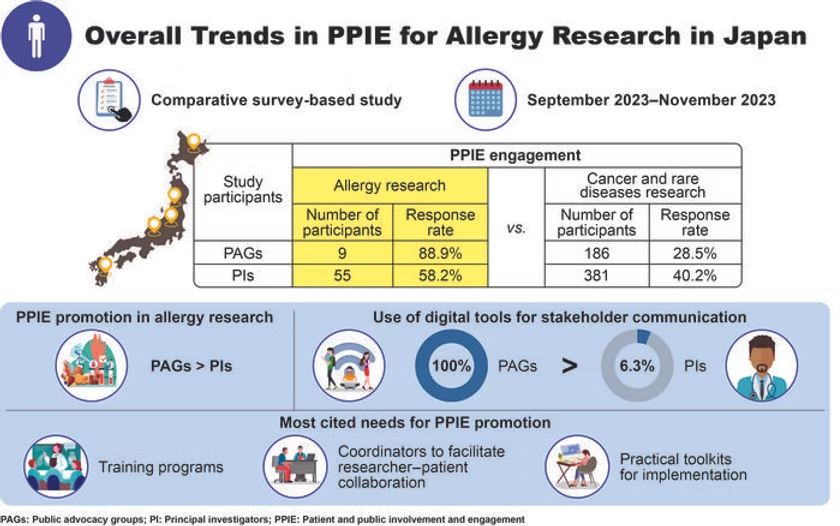
A collaborative research team from Keio University School of Medicine, the Institute of Medical Science at the University of Tokyo, and the National Center for Child Health and Development has conducted Japan’s first comprehensive cross-disease, cross-stakeholder survey on Patient and Public Involvement and Engagement (PPIE) in medical research. The study compared the state of PPIE in allergy research with that in cancer and rare diseases—two areas where patient engagement has already made substantial progress.
The findings, presented as part of ongoing efforts to advance inclusive and participatory health research, reveal a significant gap between patient advocacy groups (PAGs) and researchers within the allergy field in Japan.
Patient Advocacy Groups Lead the Way
According to the survey, 100% of allergy-related PAGs viewed PPIE as essential to advancing research. Half of these groups already had formal rules or structures in place to facilitate patient involvement. This high level of readiness demonstrates that patient groups are well aware of the importance of active participation in shaping research agendas, particularly for conditions where lifestyle and environmental factors play a major role in disease management.
In contrast, engagement among researchers remains limited. Only 9.4% of allergy researchers reported having established rules for PPIE, and just 50% considered it a necessary component of their work. These figures are notably lower than those observed in cancer and rare disease research, where 64.7% of researchers acknowledged the importance of PPIE.
Key Priorities for Stronger Collaboration
The survey identified three major priorities shared by PAGs to strengthen PPIE implementation in Japan:
- Training programs for both patients and researchers to build mutual understanding and effective collaboration.
- Dedicated coordinators to facilitate partnerships between patients, advocacy groups, and research teams.
- Practical toolkits and case studies that can guide the integration of patient perspectives throughout the research process.
The study also noted a striking difference in digital communication practices. While all PAGs (100%) actively used digital tools and online platforms to communicate and organize activities, only 6.3% to 15.6% of researchers reported similar adoption. This digital divide highlights an additional barrier to inclusive collaboration.
WATCH ALSO: https://www.modernmechanics24.com/post/german-diving-robot-cleans-oceans
READ ALSO: https://www.modernmechanics24.com/post/china-s-lightweight-3d-printed-jet-engine-takes-flight
Bridging the Engagement Gap
“These findings show that allergy patient advocacy groups in Japan are ready and willing to engage, but researchers have yet to catch up,” said Dr. Takeya Adachi, corresponding author and dermatologist at Keio University. “Closing this gap is critical, especially since allergy management depends heavily on daily-life factors such as environment and lifestyle. Patient perspectives are essential to shaping meaningful research.”
Aligning with National Health Policy
The study’s conclusions align with broader national initiatives led by the Japan Agency for Medical Research and Development (AMED), which promotes PPIE as a key element of Japan’s health innovation policy. The researchers emphasized that fostering patient-centered research will not only improve the relevance and quality of scientific outcomes but also enhance trust and collaboration between the public and the research community.
Their findings were also presented at the United Nations General Assembly (UNGA) Science Summit 2025, underscoring the global significance of developing inclusive, participatory research models. As Japan continues to strengthen its health research infrastructure, this study highlights an urgent need to close the engagement gap between patients and researchers—paving the way for more collaborative and impactful allergy research in the years ahead.