Credit: Ultra Maritime
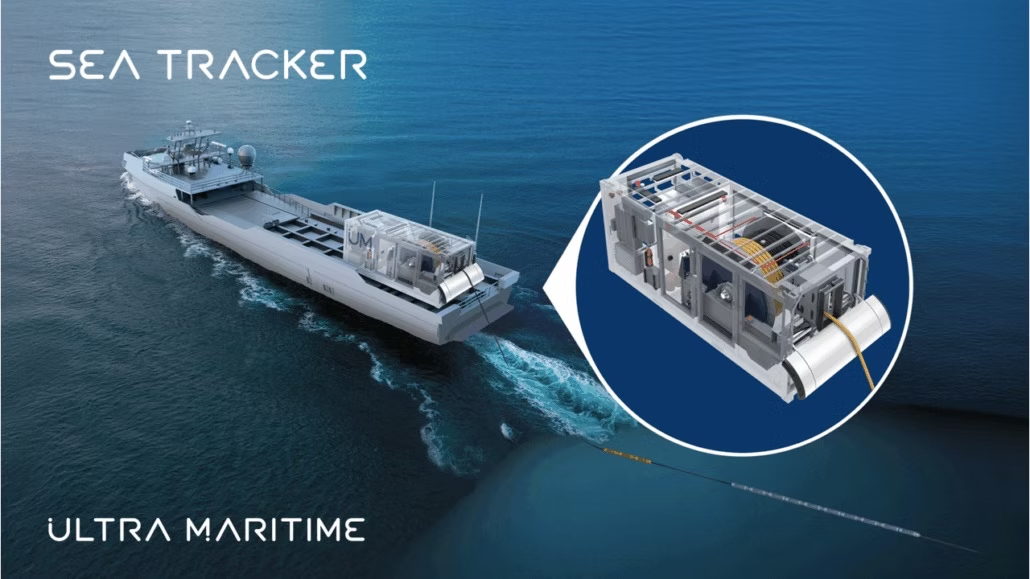
Ultra Maritime announced Sea Tracker, a modular containerized submarine detection system delivering frigate-grade anti-submarine warfare (ASW) performance in a standardized 20-foot ISO container designed for uncrewed and non-traditionally crewed platforms.
The system integrates Ultra Maritime’s full suite of towed technologies including torpedo defense systems, inline active/passive arrays, and strategic surveillance arrays. Through collaboration with Atlantic Canada Opportunities Agency (ACOA) and COVE, the solution will support Defence Research and Development Canada (DRDC) in developing next-generation ASW concepts with capability to classify, track and prosecute submarines in all operational areas.
cIt is designed for uncrewed and non-traditionally crewed platforms, dramatically increasing preparedness and situational awareness in complex maritime environments.
Sea Tracker’s scalable architecture enables the seamless integration of Ultra Maritime’s full suite of towed technologies, including torpedo defense systems, inline active/passive, and strategic surveillance arrays. This system-of-systems capability enables a rapidly deployable containerized asset, allowing navies the ability to classify, track and prosecute the stealthiest submarines in all areas of operation.
READ ALSO: https://www.modernmechanics24.com/post/mit-artificial-tendons-robot-boost
Through the collaboration and support of the Atlantic Canada Opportunities Agency (ACOA) and COVE, Ultra Maritime is providing this modular solution to the Defence Research and Development Canada (DRDC) for the experimentation and development of next-generation ASW concepts. These partnerships underscore a shared commitment to innovation, conceptual and tactical development for the purpose of maritime defense excellence.
With continued investment in advanced technologies, Ultra Maritime remains dedicated to delivering best-in-class solutions that provide navies with the agility, adaptability and strategic advantage needed to dominate the underwater domain.
The containerized approach represents a paradigm shift in anti-submarine warfare deployment. Traditional ASW capabilities require purpose-built frigates, destroyers, or submarines equipped with integrated sonar systems, towed arrays, and processing equipment—platforms costing hundreds of millions or billions of dollars with construction timelines measured in years.
WATCH ALSO: https://www.modernmechanics24.com/post/china-humanoid-robot-plays-basketball
By packaging frigate-grade detection capability into a standard 20-foot ISO container, Sea Tracker can be deployed on virtually any vessel capable of handling containerized cargo. This includes commercial ships temporarily militarized during conflicts, offshore support vessels, coast guard cutters, or purpose-built uncrewed surface vessels that lack the size and infrastructure for traditional ASW systems.
The system-of-systems architecture proves particularly significant. Rather than a single-function sensor, Sea Tracker integrates multiple detection and defense capabilities: torpedo defense systems protect the host platform, inline active/passive sonar provides both listening (passive) and pinging (active) detection modes, while strategic surveillance arrays enable wide-area monitoring for submarine activity patterns.
This integration addresses the complete ASW mission cycle from initial detection through classification (determining whether a contact is actually a submarine), tracking (maintaining contact as targets maneuver), and prosecution (guiding weapons or coordinating with other assets to engage the threat).
READ ALSO: https://www.modernmechanics24.com/post/scientists-detect-rare-lightning-side-bursts
The containerized format enables rapid deployment scaling. During peacetime, a navy might operate a small number of dedicated ASW frigates. During crisis or conflict, they could quickly equip dozens of auxiliary vessels with Sea Tracker containers, multiplying surveillance coverage across vast ocean areas without waiting years for new warship construction.
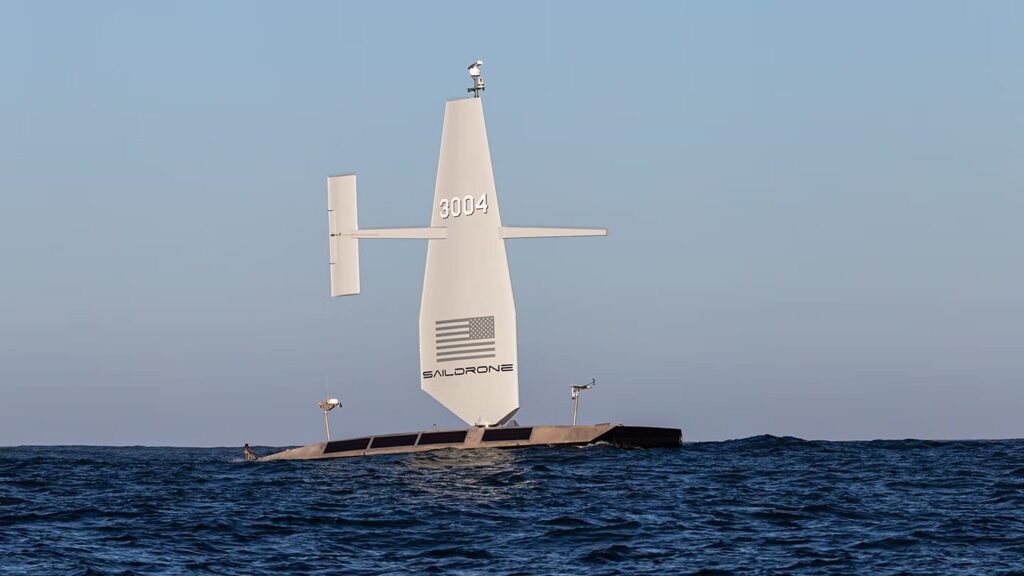
The focus on uncrewed and non-traditionally crewed platforms aligns with broader naval trends toward autonomous systems. Large uncrewed surface vessels can operate for weeks or months with minimal crew, patrolling choke points, transit routes, or areas of interest while continuously searching for submarine activity—missions that would exhaust human crews on traditional vessels.
The DRDC partnership indicates Canadian government interest in validating and developing tactics for these next-generation concepts. Experimentation with DRDC will likely explore questions like optimal deployment patterns, integration with crewed vessels and maritime patrol aircraft, effectiveness against modern quiet submarines, and development of doctrine for containerized ASW operations.
WATCH ALSO: https://www.modernmechanics24.com/post/uae-first-domestic-drone-maiden-flight
The submarine threat continues evolving with quieter propulsion systems, better sound-dampening technologies, and increasingly sophisticated tactics. Nations like Russia and China field advanced conventional and nuclear submarines capable of threatening surface vessels, undersea communications cables, and strategic sea lanes.
Meanwhile, proliferation of diesel-electric submarines gives even smaller nations potent sea denial capabilities. The Atlantic Canada Opportunities Agency and COVE (Centre of Ocean Ventures & Entrepreneurship) involvement reflects regional economic development objectives alongside defense innovation. Atlantic Canada has significant maritime expertise, shipbuilding heritage, and ocean technology sectors that benefit from defense contracts and technology development programs.
READ ALSO: https://www.modernmechanics24.com/post/cambridge-lab-nano-antennas-electrical-boost