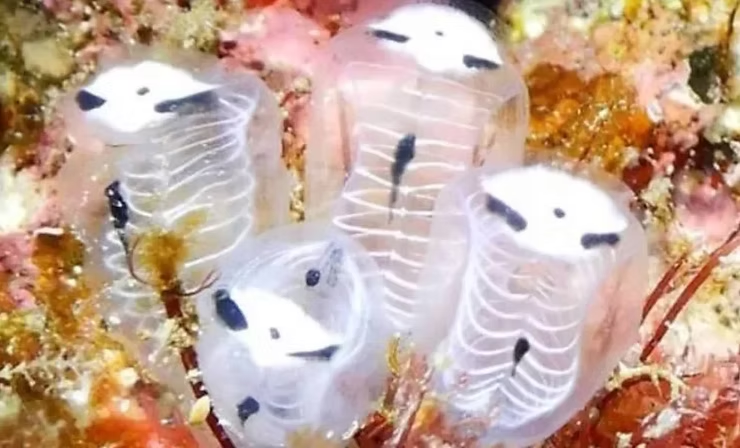
Divers in Japan have discovered a remarkable new marine species, Clavelina ossipandae, which strikingly resembles a panda’s skeleton. This unique sea creature could offer new insights into how color patterns evolve in underwater life.
During a recent expedition near Kumejima Island in Japan, divers came across a striking sea creature with a panda-like appearance. Belonging to the Clavelina genus, the animal was initially mistaken for part of an aquarium display—until researchers realized it was an entirely new species. Named Clavelina ossipandae, the creature has captivated both marine biologists and the public, thanks to its distinctive, skeletal pattern reminiscent of cartoon panda bones. The discovery, confirmed through detailed fieldwork, lab studies, and genetic testing, was published in the journal Species Diversity. It also highlights how passive citizen science—such as divers sharing photos—can play a key role in uncovering new marine biodiversity.
A Closer Look at Clavelina ossipandae: The Sea Creature That Looks Like a Panda
Measuring just 20 millimeters in length, this tiny marine animal caught attention for its panda-like appearance—marked by bold white bands and dark patches on each individual zooid. The striking contrast creates what researchers call the “panda effect,” which immediately intrigued divers who spotted it. Naohiro Hasegawa, co-author of the study and a marine biologist at Hokkaido University, explained, “The white areas that resemble bones are actually blood vessels running horizontally through the sea squirt’s gills.” This unique feature tricks the eye, making vascular structures appear skeletal, and adds to the animal’s curious charm.
At first, Clavelina ossipandae wasn’t identified as a new species. Photos taken by divers began circulating on social media, sparking curiosity and debate within diving communities long before scientists officially took note. Initially, researchers relied solely on these images, which already hinted at the creature’s unusual anatomy. It wasn’t until 2022 that dedicated field surveys and specimen collection confirmed it as a distinct species. The sea squirts were found in sunlit reef areas, between 16 and 66 feet deep—shallow waters where they appear to thrive. Yet, their discovery raises new questions about their role in the ecosystem and how they evolved.
READ ALSO: ‘Surface Avatar’ Robot Test Wraps Up on ISS, Bringing Mars Missions Closer
The Ecological Role of Clavelina Ossipandae
Though tiny in size, Clavelina ossipandae plays a vital role in its ecosystem. As a filter feeder, it draws in water through its siphons, processing volumes far greater than its own body every hour. A member of the phylum Chordata, Clavelina shares a distant evolutionary connection with vertebrates. Unlike many sea creatures, adult Clavelina remain fixed in place, feeding on plankton and microscopic organisms that pass by. In doing so, these sea squirts act as natural water purifiers—removing bacteria and microalgae that might otherwise cloud the clarity of reef waters.
Filter feeders like Clavelina ossipandae play a crucial role in sustaining healthy coral reef ecosystems. By clearing excess plankton from the water, they help maintain the clarity needed for sunlight to reach deeper parts of the reef—supporting coral growth and providing a suitable habitat for young fish that rely on clear waters to thrive. Though not as eye-catching as other marine species, organisms like Clavelina ossipandae are essential to the ecological balance of the ocean, underscoring the need to protect these often-overlooked contributors to marine life.
Understanding the Mystery of the Panda Mask
Although the panda-like appearance of Clavelina ossipandae has fascinated both scientists and divers, the reason behind its bold black-and-white coloration remains a mystery. The skeletal panda-like stripes have sparked curiosity about their evolutionary function. “We still don’t fully understand why this pattern exists,” said Hasegawa. “It raises interesting questions about color evolution in animals that don’t rely heavily on vision.” Researchers speculate that the markings might serve various purposes, such as camouflage, deterring predators, or shielding the organism from harmful UV rays.
READ ALSO: Mercedes-Benz expands its modular and scalable Van Architecture
READ ALSO: Solid-state battery road tests begin.
Another possibility is that the pattern results from “metabolic spillover” — a process where surplus pigments are produced without serving any clear biological function. This concept echoes other curious animal traits, where coloration appears to lack an obvious purpose. Ongoing research into how color evolves in marine species, particularly those with limited vision, may shed light on how such patterns develop and how animals adapt to their environments over time.
With more divers and snorkelers sharing their photos and experiences online, the pool of data available to marine researchers has expanded dramatically. Platforms like the Reef Environmental Education Foundation now house hundreds of thousands of underwater surveys, offering valuable insights into species distribution and behavior. This growing collaboration between scientists and citizen enthusiasts is speeding up discoveries, showing just how impactful non-professional contributions can be to the scientific world.
Genetic Evidence and the Confirmation of a New Species
To verify that Clavelina ossipandae was indeed a new species, scientists conducted genetic testing. They analyzed the cytochrome c oxidase subunit I gene—a standard tool for identifying species through genetic markers. Although the genetic sequence showed only a 1.26% difference from closely related species, that variation was enough to confirm Clavelina ossipandae as a distinct member of the Clavelina genus. This genetic evidence not only established its classification but also contributed valuable information for future taxonomic research.
The study underscores the rising importance of genetic barcoding in species identification. As researchers continue to discover new marine organisms, decoding their DNA offers deeper insight into evolutionary relationships and ecological roles. The genetic profile of Clavelina ossipandae also enhances our understanding of biodiversity within the Clavelina genus and its relatives.