In a world where clean energy is no longer a choice but a necessity, one of the greatest scientific challenges is discovering and testing new materials quickly enough to keep up with demand. But what if robots could not only perform experiments — but make decisions like scientists? That’s exactly what researchers at the Massachusetts Institute of Technology (MIT) have accomplished. In a groundbreaking development, published in the peer-reviewed journal Science Advances, MIT engineers have unveiled a fully autonomous robotic system capable of testing the electrical properties of new materials at speeds and precision levels that far exceed current methods.
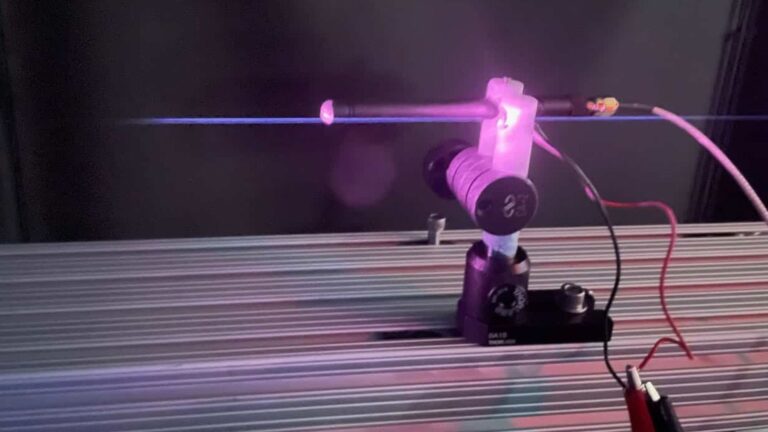
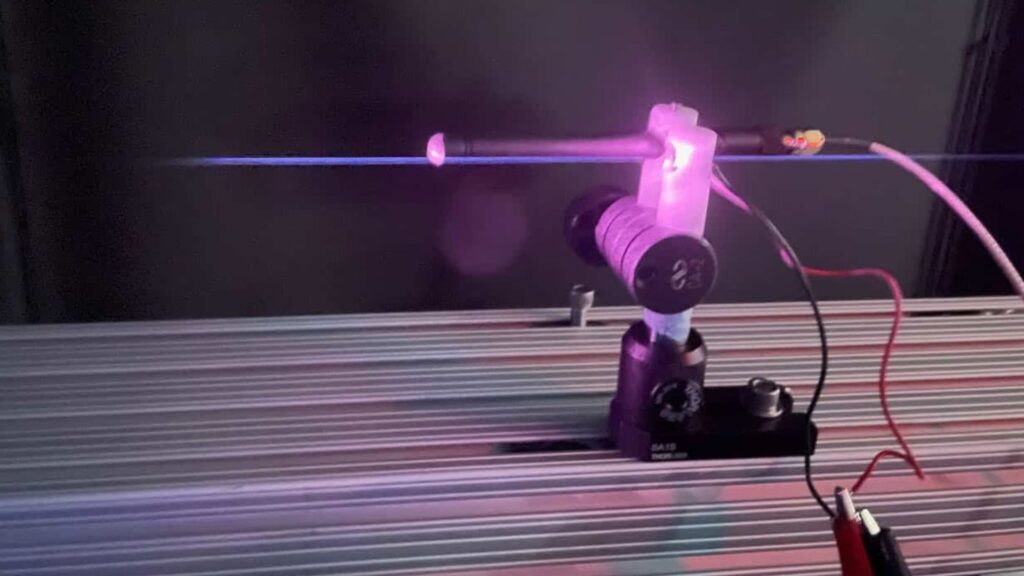
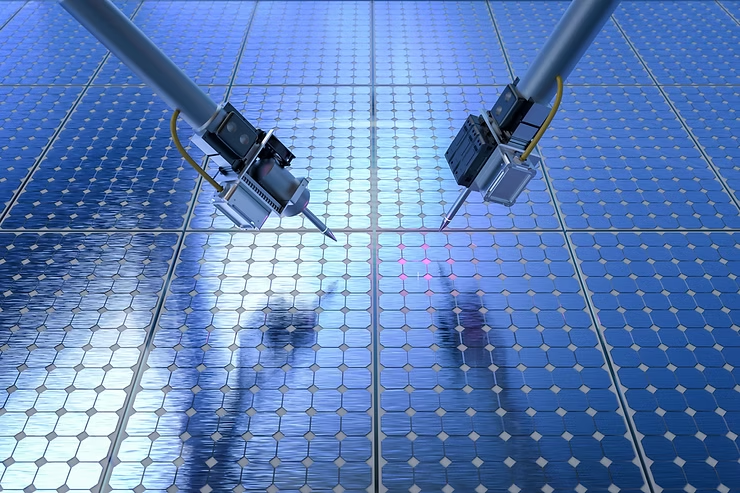
At the heart of this innovation is a robotic probe that can rapidly measure a property known as photoconductance — essentially, how well a material can conduct electricity when exposed to light. This characteristic is particularly critical in materials designed for solar panels, where light needs to be converted efficiently into electricity. But in most labs today, testing for photoconductance is still a slow, manual process that involves repeated human intervention. That makes the process of identifying new, promising solar materials sluggish and costly.
The MIT robot turns this system on its head. It not only automates the task — it optimizes it, using artificial intelligence that is trained with domain knowledge from actual materials scientists. This means the robot doesn’t just randomly place its probe and hope for results. Instead, it selects measurement points based on where it is most likely to extract valuable data, using a scientific strategy learned from human experts. That’s a huge leap from traditional automation, which often lacks judgment or purpose.
According to Science Advances, which published the team’s full study, the system was tested continuously for 24 hours and managed to perform over 125 unique measurements per hour — all without a single human touch. More impressively, the results were more consistent and precise than those achieved through previous AI-assisted or manual systems. The secret? A planning algorithm that ensures not only the right contact points are selected but also that the robot moves between them in the most efficient way possible. Every motion is calculated. Every decision is informed. Nothing is random.
READ ALSO: UB Researcher Leads Groundbreaking Discovery of Earliest Bronze Age Settlement in the Maghreb
READ ALSO: US’ defence giant hits big milestone, delivers crucial F-35 fighter jet part every 30 hours
“This is incredibly exciting because it provides a clear pathway for autonomous, contact-based characterization methods,” said Professor Tonio Buonassisi, senior author of the paper and a faculty member in MIT’s Department of Mechanical Engineering. “Not every important property of a material can be measured without physical contact. If you need to actually touch your sample, you want the process to be fast and informative — and that’s exactly what this robot delivers.”
Joining Buonassisi on the paper are graduate student Alexander (Aleks) Siemenn, the project’s lead author, along with postdoctoral researchers Basita Das and Kangyu Ji, and fellow graduate student Fang Sheng. Their work is not just about building another robotic tool — it’s about creating a collaborative scientific assistant that can one day work side by side with researchers in real-time lab environments.
What makes this story even more impactful is the timing. The energy sector is under massive pressure to discover new solar materials that are more efficient, cheaper, and stable under various environmental conditions. But that can’t happen if testing remains the bottleneck. Even if researchers design 50 new material compositions in a week, only a handful can be fully tested due to time constraints. A system like MIT’s can shift that dynamic, enabling high-throughput characterization, where dozens or even hundreds of materials are tested quickly and automatically.
READ ALSO: Kawasaki’s horse-inspired robot can give you a comfortable ride even on uneven terrain
READ ALSO: Studying the Rapid Electrical Charging Behavior of Liquids
And this isn’t just about solar. Photoconductance is also important in semiconductors, sensors, and optoelectronics — industries where the ability to analyze subtle changes in a material’s behavior can mean the difference between a breakthrough and a dead end. MIT’s robot is poised to become a tool across sectors, saving time, reducing cost, and increasing scientific output.
As Science Advances noted in its editorial highlight, this breakthrough represents more than a speed upgrade. It reflects a deeper integration of artificial intelligence into scientific methodology. The robot doesn’t just do the science — it understands why the science matters,and acts accordingly. That’s a powerful shift in how research will be conducted in the years to come.
Lead author Siemenn put it this way: “We’re not replacing scientists. We’re giving them a tool that can match their reasoning, reduce their workload, and dramatically increase the pace of discovery. It’s like having an extra lab partner who never gets tired, never gets distracted, and always works with purpose.”
The team also envisions future upgrades. In time, the robot could incorporate more layers of scientific decision-making — such as suggesting its own hypotheses or designing new experiments based on previous results. It could even function in remote or hazardous environments, where human presence is limited or risky, such as nuclear plants or space stations.
Ultimately, what MIT has built is not just a faster machine, but a smarter approach to materials science. It reflects a future where human creativity and robotic efficiency combine — not to compete, but to accelerate progress. In the climate race we’re in, speed matters. Precision matters. But above all, intelligent tools matter — tools like this one, that blend engineering, science, and AI in perfect harmony.