President Trump issued an Executive Order launching the Genesis Mission, a national effort led by the Department of Energy to transform American science and innovation through artificial intelligence, aiming to double productivity and impact within a decade.
Secretary of Energy Chris Wright announced Under Secretary for Science Darío Gil will lead the initiative mobilizing 17 National Laboratories and approximately 40,000 DOE scientists, engineers, and technical staff to build an integrated discovery platform connecting supercomputers, AI systems, quantum systems, and scientific instruments.
President Trump today issued an Executive Order to launch the Genesis Mission, a historic national effort led by the Department of Energy. The Genesis Mission will transform American science and innovation through the power of artificial intelligence (AI), strengthening the nation’s technological leadership and global competitiveness.
The ambitious mission will harness the current AI and advanced computing revolution to double the productivity and impact of American science and engineering within a decade. It will deliver decisive breakthroughs to secure American energy dominance, accelerate scientific discovery, and strengthen national security.
“Throughout history, from the Manhattan Project to the Apollo mission, our nation’s brightest minds and industries have answered the call when their nation needed them,” said U.S. Secretary of Energy Chris Wright. “Today, the United States is calling on them once again. Under President Trump’s leadership, the Genesis Mission will unleash the full power of our National Laboratories, supercomputers, and data resources to ensure that America is the global leader in artificial intelligence and to usher in a new golden era of American discovery.”
READ ALSO: https://www.modernmechanics24.com/post/tibet-dung-microbes-transform-biotech
The announcement builds on President Trump’s Executive Order Removing Barriers to American Leadership In Artificial Intelligence and advances his America’s AI Action Plan released earlier this year—a directive to remove barriers to innovation, reduce dependence on foreign adversaries, and unleash the full strength of America’s scientific enterprise.
Secretary Wright has designated Under Secretary for Science Darío Gil to lead the initiative. The Genesis Mission will mobilize the Department of Energy’s 17 National Laboratories, industry, and academia to build an integrated discovery platform.
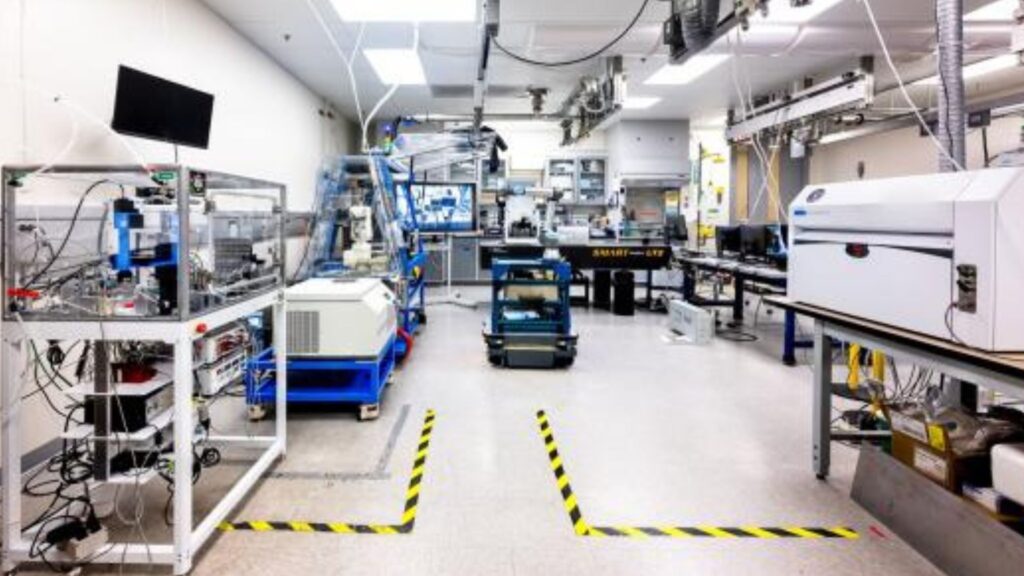
The platform will connect the world’s best supercomputers, AI systems, and next-generation quantum systems with the most advanced scientific instruments in the nation. Once complete, the platform will be the world’s most complex and powerful scientific instrument ever built. It will draw on the expertise of roughly 40,000 DOE scientists, engineers, and technical staff, alongside private sector innovators, to ensure that the United States leads and builds the technologies that will define the future.
WATCH ALSO: https://www.modernmechanics24.com/post/china-40000t-sichuan-assault-ship
The Genesis Mission will focus on addressing three key challenges of national importance: American energy dominance: The Genesis Mission will accelerate advanced nuclear, fusion, and grid modernization using AI to provide affordable, reliable, and secure energy for Americans.
Advancing discovery science: Through DOE’s investment and collaboration with industry, America is building the quantum ecosystem that will power discoveries—and industries—for decades to come. Ensuring national security: DOE will create advanced AI technologies for national security missions, deploy systems to ensure the safety and reliability of the U.S. nuclear stockpile, and accelerate the development of defense-ready materials.
The initiative represents one of the most ambitious scientific mobilizations since the Cold War era, drawing explicit comparisons to landmark projects like the Manhattan Project and Apollo mission. By integrating the 17 National Laboratories—which include facilities like Los Alamos, Lawrence Livermore, Oak Ridge, and Argonne—with industry and academic partners, the program aims to create unprecedented synergies between computational power and experimental science.
READ ALSO: https://www.modernmechanics24.com/post/china-artificial-sun-global-fusion
The quantum computing component proves particularly significant. While current quantum systems remain in relatively early development stages, the Genesis Mission’s integration of quantum computing with classical supercomputing and AI could accelerate breakthroughs in materials science, drug discovery, and fundamental physics that remain beyond the reach of conventional computers.
The energy dominance focus addresses growing electricity demand driven by data centers, AI training facilities, and industrial electrification. Advanced nuclear reactors and fusion energy—both computationally intensive to model and optimize—could benefit substantially from AI-accelerated design and testing cycles that reduce development timelines from decades to years.
The national security applications extend beyond nuclear stockpile stewardship. AI-designed materials could revolutionize defense technologies, from hypersonic vehicles to directed energy weapons, while quantum-resistant cryptography becomes increasingly critical as quantum computers threaten current encryption standards.
The 40,000-person workforce mobilization across DOE facilities represents substantial human capital investment. These scientists and engineers bring domain expertise in nuclear physics, materials science, computational chemistry, and other specialized fields that pure AI companies cannot easily replicate.
WATCH ALSO: https://www.modernmechanics24.com/post/byd-seal-smooth-electric-power
However, the initiative faces challenges. Recruiting and retaining top AI talent requires competing with private sector compensation packages that often exceed government pay scales. Integrating disparate computing systems across multiple laboratories presents significant technical hurdles. And translating AI capabilities into practical applications—rather than just impressive demonstrations—requires sustained focus on engineering and deployment.
The Genesis Mission’s success metrics—doubling science and engineering productivity within a decade—provide ambitious but measurable targets. Whether this timeline proves realistic depends on numerous factors including funding levels, regulatory environments, international competition, and fundamental AI capabilities that remain uncertain.