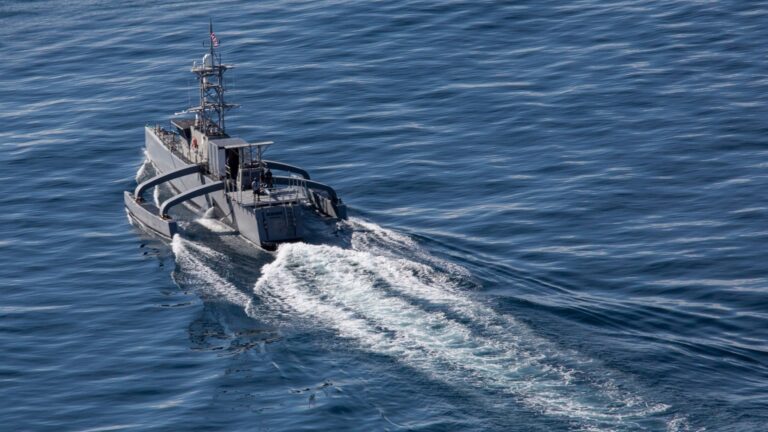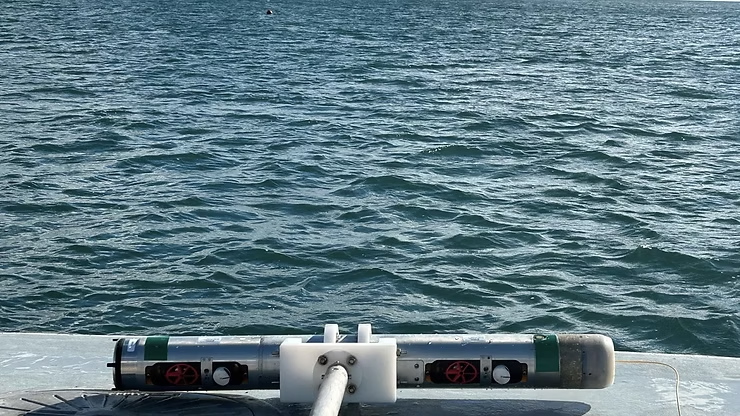
In a significant advancement for naval operations, Raytheon, an RTX business, has successfully demonstrated its Barracuda Mine Neutralization Vehicle in untethered, semi-autonomous operations for the first time. This milestone was achieved during recent open water testing in Narragansett Bay, showcasing the vehicle’s impressive capabilities.
During the demonstration, Barracuda exhibited its ability to autonomously navigate, communicate, detect, and identify underwater targets, all while operating independently. This innovative technology promises to enhance the safety and efficiency of U.S. Navy operations, keeping sailors out of harm’s way while effectively addressing underwater threats.
“This recent testing demonstrates the significant strides we’ve made in advancing mine countermeasure technology,” said Barbara Borgonovi, president of Naval Power at Raytheon. “Barracuda’s capabilities will dramatically improve safety and efficiency for the U.S. Navy, keeping sailors out of harm’s way while effectively addressing underwater threats.”
Barracuda is the newest program of record for mine neutralization
Barracuda is the newest program of record for mine neutralization within the U.S. Navy. It stands out as the first untethered, semi-autonomous system capable of tracking and identifying various types of mines, including bottom, volume, and near-surface mines. The system operates with a man-in-the-loop approach, allowing a human operator to make the final decision on neutralization.
The Barracuda program originated in Raytheon’s Advanced Technology business segment, a team dedicated to maturing innovative technologies that are integrated into Raytheon products, including notable programs like LTAMDS and SPY-6.
Raytheon’s Barracuda is on track to achieve initial operational capability
In alignment with the Navy’s acquisition plan, Raytheon’s Barracuda is on track to achieve initial operational capability and low-rate initial production by 2030. Furthermore, the company is investing in the development of a larger and more advanced variant of Barracuda to address a wider range of mission requirements, including subsea and seabed warfare.
As the Barracuda continues to evolve, it represents a promising future for mine countermeasure operations, ensuring that the U.S. Navy can effectively tackle underwater threats while prioritizing the safety of its personnel.